
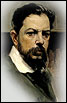
Joaquin Sorolla y Bastida Giclée Fine Art Prints 1 of 6
1863-1923
Spanish Impressionist Painter
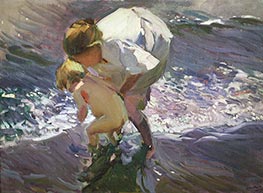
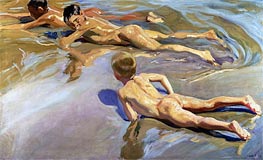
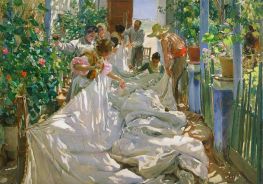
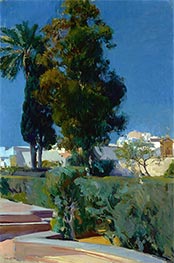
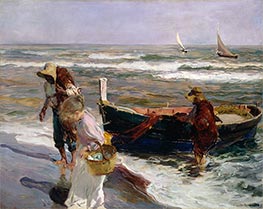
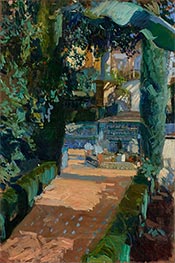
Light was everything to Joaquín Sorolla y Bastida - the blinding Mediterranean glare on wet sand, the sun filtering through garden leaves, the glow of a gas lamp in a scientist's laboratory. Born in Valencia on 27 February 1863 and dead in Madrid on 10 August 1923, this Spanish painter devoted his life to capturing luminosity with an almost obsessive precision. His canvases shimmer with the heat of the Iberian coast, yet behind the radiance lay a personal history marked by loss, relentless ambition, and an extraordinary capacity for work.
Tragedy struck early. In August 1865, when Sorolla was just two years old, both his parents - his father, a tradesman also named Joaquín, and his mother, Concepción Bastida - died, likely from cholera. He and his younger sister Concha were taken in by their maternal aunt and uncle, a locksmith by trade. Perhaps this rupture, this abrupt severance from his origins, gave Sorolla his fierce determination to build something permanent through art. At nine, he began formal instruction in his native city, studying under Cayetano Capuz and later Salustiano Asenjo. By eighteen, the young painter had travelled to Madrid, where he spent hours absorbing the Old Masters at the Museo del Prado. Velázquez, in particular, left an indelible mark - one that would resurface decades later in ambitious family portraits.
Military service completed, Sorolla secured a grant at twenty-two that allowed him four years of study in Rome. There, Francisco Pradilla, director of the Spanish Academy, offered guidance and a model of disciplined professionalism. A journey to Paris in 1885 opened new horizons. Exhibitions of Jules Bastien-Lepage and Adolph von Menzel introduced him to currents of naturalism and plein air painting that would shape his mature vision. Returning to Rome, he continued his education alongside José Benlliure, Emilio Sala, and José Villegas Cordero - Spanish artists working within the city's cosmopolitan atmosphere.
In 1888, Sorolla married Clotilde García del Castillo, whom he had met nine years earlier while working in her father's studio. Their union proved enduring and creatively fertile. By 1895, they had three children: María, Joaquín, and Elena. Clotilde and the children became recurring subjects, appearing in sun-drenched garden scenes that rank among his most affecting works. Relocating to Madrid in 1890, Sorolla dedicated the following decade to large-scale paintings - orientalist fantasies, mythological narratives, historical reconstructions, and social commentaries - intended for salons and international exhibitions in Paris, Venice, Munich, Berlin, and Chicago.
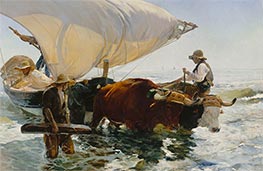
Recognition came swiftly. Another Marguerite, completed in 1892, earned a gold medal at the National Exhibition in Madrid and first prize at the Chicago International Exhibition, where it was purchased and eventually donated to Washington University in St. Louis. The Return from Fishing: Hauling the Boat, exhibited at the Paris Salon in 1894, was acquired by the French state for the Musée du Luxembourg. These successes established Sorolla as the foremost figure of the modern Spanish school.
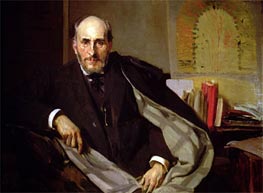
Two canvases from 1897 reveal an unexpected dimension. Portrait of Dr. Simarro at the Microscope and A Research depict the neurologist Luis Simarro in his laboratory, bathed in the warm glow of a gas burner contrasting with faint afternoon light from a window. Here, Sorolla brought his naturalist eye to the world of science, capturing an indoor environment with the same attention he lavished on beaches. The paintings won the Prize of Honor at the National Exhibition of Fine Arts in Madrid.
A decisive turning point arrived with Sad Inheritance in 1899. Enormous in scale and meticulously finished, the painting depicts crippled children - victims of congenital syphilis, some possibly affected by a recent polio epidemic - bathing in the sea at Valencia under a monk's supervision. The subject was unflinching, the execution virtuosic. Preparatory oil sketches, painted with extraordinary luminosity and loose brushwork, so pleased Sorolla that he gave two as gifts to the American painters John Singer Sargent and William Merritt Chase. Sad Inheritance earned the Grand Prix and a medal of honor at the Paris Universal Exposition of 1900, followed by the medal of honor at Madrid's National Exhibition in 1901. Sorolla never returned to such overt social themes. The beach, henceforth, would be a place of pleasure rather than suffering.
Honours multiplied. The Légion d'Honneur, membership in the Académie des Beaux-Arts in Paris, the National Academy of Fine Arts in Lisbon, and the Real Academia de Bellas Artes de San Carlos de Valencia - all followed in rapid succession. In 1906, an exhibition at the Galeries Georges Petit in Paris displayed nearly 500 works, from early paintings to recent beach scenes. Critics marvelled at his productivity. The show was a financial triumph.
While in England in 1908, Sorolla met Archer Milton Huntington, founder of the Hispanic Society of America in New York. The encounter proved transformative. Huntington invited him to exhibit at the Society in 1909; 356 paintings were shown, 195 sold. Sorolla spent five months in America, producing more than twenty portraits, including one of President William Howard Taft, painted at the White House and now displayed at the Taft Museum of Art in Cincinnati.
Formal portraiture was not his preferred mode - it constrained his spontaneity - yet commissions proved lucrative and family subjects irresistible. My Family, painted in 1901, echoes Velázquez's Las Meninas, grouping wife and children in the foreground while the painter appears reflected in a distant mirror. Portrait of Mr. Louis Comfort Tiffany from 1911 places the American designer in his Long Island garden, surrounded by extravagant blooms. In My Wife and Daughters in the Garden, completed in 1910, conventional portraiture dissolves into fluid passages of thick colour, a celebration of domestic happiness rendered in impasto.
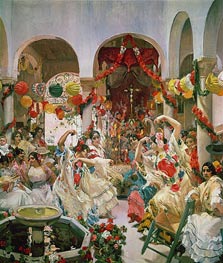
Huntington commissioned what would become Sorolla's defining project: a monumental cycle of murals depicting the regions of Spain. Originally envisioned as a history of the nation, the painter preferred a more atmospheric approach, eventually calling the series The Provinces of Spain - or, alternately, Vision of Spain. Fourteen panels, each between twelve and fourteen feet high and totalling 227 feet in length, were painted almost entirely en plein air. Sorolla travelled to Navarre, Aragon, Catalonia, Valencia, Elche, Seville, Andalusia, Extremadura, Galicia, Guipuzcoa, Castile, Leon, and Ayamonte, positioning models in local costume before panoramic landscapes. The labour was immense. By 1917, he admitted exhaustion. The final panel was completed in July 1919.
In 1920, while painting a portrait in his Madrid garden, Sorolla suffered a stroke. Paralysis confined him for over three years. He died on 10 August 1923 and was buried in the Cementeri de Valencia. The Sorolla Room at the Hispanic Society opened to the public in 1926, displaying the Provinces of Spain murals that remain on permanent view today.
Clotilde bequeathed many of his paintings to the Spanish public; the collection forms the basis of the Museo Sorolla, housed in the artist's former Madrid residence and opened in 1932. In 1933, J. Paul Getty acquired ten Impressionist beach scenes, several now at the J. Paul Getty Museum. Sorolla's legacy persists in the work of Spanish painters labelled "sorollista," in the Valencia high-speed railway station bearing his name, and in a museum scheduled to open in Valencia's Palau de les Comunicacions in 2026. His canvases continue to draw viewers into Mediterranean light - a light he understood not as mere illumination but as the very substance of vision.
Tragedy struck early. In August 1865, when Sorolla was just two years old, both his parents - his father, a tradesman also named Joaquín, and his mother, Concepción Bastida - died, likely from cholera. He and his younger sister Concha were taken in by their maternal aunt and uncle, a locksmith by trade. Perhaps this rupture, this abrupt severance from his origins, gave Sorolla his fierce determination to build something permanent through art. At nine, he began formal instruction in his native city, studying under Cayetano Capuz and later Salustiano Asenjo. By eighteen, the young painter had travelled to Madrid, where he spent hours absorbing the Old Masters at the Museo del Prado. Velázquez, in particular, left an indelible mark - one that would resurface decades later in ambitious family portraits.
Military service completed, Sorolla secured a grant at twenty-two that allowed him four years of study in Rome. There, Francisco Pradilla, director of the Spanish Academy, offered guidance and a model of disciplined professionalism. A journey to Paris in 1885 opened new horizons. Exhibitions of Jules Bastien-Lepage and Adolph von Menzel introduced him to currents of naturalism and plein air painting that would shape his mature vision. Returning to Rome, he continued his education alongside José Benlliure, Emilio Sala, and José Villegas Cordero - Spanish artists working within the city's cosmopolitan atmosphere.
In 1888, Sorolla married Clotilde García del Castillo, whom he had met nine years earlier while working in her father's studio. Their union proved enduring and creatively fertile. By 1895, they had three children: María, Joaquín, and Elena. Clotilde and the children became recurring subjects, appearing in sun-drenched garden scenes that rank among his most affecting works. Relocating to Madrid in 1890, Sorolla dedicated the following decade to large-scale paintings - orientalist fantasies, mythological narratives, historical reconstructions, and social commentaries - intended for salons and international exhibitions in Paris, Venice, Munich, Berlin, and Chicago.
Recognition came swiftly. Another Marguerite, completed in 1892, earned a gold medal at the National Exhibition in Madrid and first prize at the Chicago International Exhibition, where it was purchased and eventually donated to Washington University in St. Louis. The Return from Fishing: Hauling the Boat, exhibited at the Paris Salon in 1894, was acquired by the French state for the Musée du Luxembourg. These successes established Sorolla as the foremost figure of the modern Spanish school.
Two canvases from 1897 reveal an unexpected dimension. Portrait of Dr. Simarro at the Microscope and A Research depict the neurologist Luis Simarro in his laboratory, bathed in the warm glow of a gas burner contrasting with faint afternoon light from a window. Here, Sorolla brought his naturalist eye to the world of science, capturing an indoor environment with the same attention he lavished on beaches. The paintings won the Prize of Honor at the National Exhibition of Fine Arts in Madrid.
A decisive turning point arrived with Sad Inheritance in 1899. Enormous in scale and meticulously finished, the painting depicts crippled children - victims of congenital syphilis, some possibly affected by a recent polio epidemic - bathing in the sea at Valencia under a monk's supervision. The subject was unflinching, the execution virtuosic. Preparatory oil sketches, painted with extraordinary luminosity and loose brushwork, so pleased Sorolla that he gave two as gifts to the American painters John Singer Sargent and William Merritt Chase. Sad Inheritance earned the Grand Prix and a medal of honor at the Paris Universal Exposition of 1900, followed by the medal of honor at Madrid's National Exhibition in 1901. Sorolla never returned to such overt social themes. The beach, henceforth, would be a place of pleasure rather than suffering.
Honours multiplied. The Légion d'Honneur, membership in the Académie des Beaux-Arts in Paris, the National Academy of Fine Arts in Lisbon, and the Real Academia de Bellas Artes de San Carlos de Valencia - all followed in rapid succession. In 1906, an exhibition at the Galeries Georges Petit in Paris displayed nearly 500 works, from early paintings to recent beach scenes. Critics marvelled at his productivity. The show was a financial triumph.
While in England in 1908, Sorolla met Archer Milton Huntington, founder of the Hispanic Society of America in New York. The encounter proved transformative. Huntington invited him to exhibit at the Society in 1909; 356 paintings were shown, 195 sold. Sorolla spent five months in America, producing more than twenty portraits, including one of President William Howard Taft, painted at the White House and now displayed at the Taft Museum of Art in Cincinnati.
Formal portraiture was not his preferred mode - it constrained his spontaneity - yet commissions proved lucrative and family subjects irresistible. My Family, painted in 1901, echoes Velázquez's Las Meninas, grouping wife and children in the foreground while the painter appears reflected in a distant mirror. Portrait of Mr. Louis Comfort Tiffany from 1911 places the American designer in his Long Island garden, surrounded by extravagant blooms. In My Wife and Daughters in the Garden, completed in 1910, conventional portraiture dissolves into fluid passages of thick colour, a celebration of domestic happiness rendered in impasto.
Huntington commissioned what would become Sorolla's defining project: a monumental cycle of murals depicting the regions of Spain. Originally envisioned as a history of the nation, the painter preferred a more atmospheric approach, eventually calling the series The Provinces of Spain - or, alternately, Vision of Spain. Fourteen panels, each between twelve and fourteen feet high and totalling 227 feet in length, were painted almost entirely en plein air. Sorolla travelled to Navarre, Aragon, Catalonia, Valencia, Elche, Seville, Andalusia, Extremadura, Galicia, Guipuzcoa, Castile, Leon, and Ayamonte, positioning models in local costume before panoramic landscapes. The labour was immense. By 1917, he admitted exhaustion. The final panel was completed in July 1919.
In 1920, while painting a portrait in his Madrid garden, Sorolla suffered a stroke. Paralysis confined him for over three years. He died on 10 August 1923 and was buried in the Cementeri de Valencia. The Sorolla Room at the Hispanic Society opened to the public in 1926, displaying the Provinces of Spain murals that remain on permanent view today.
Clotilde bequeathed many of his paintings to the Spanish public; the collection forms the basis of the Museo Sorolla, housed in the artist's former Madrid residence and opened in 1932. In 1933, J. Paul Getty acquired ten Impressionist beach scenes, several now at the J. Paul Getty Museum. Sorolla's legacy persists in the work of Spanish painters labelled "sorollista," in the Valencia high-speed railway station bearing his name, and in a museum scheduled to open in Valencia's Palau de les Comunicacions in 2026. His canvases continue to draw viewers into Mediterranean light - a light he understood not as mere illumination but as the very substance of vision.
123 Joaquín Sorolla Artworks
Page 1 of 6
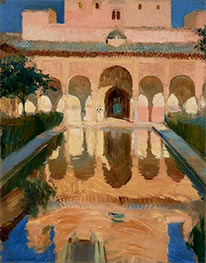
Giclée Canvas Print
$74.76
$74.76
SKU: 18685-JSB
Joaquin Sorolla y Bastida
Original Size:104 x 82 cm
J. Paul Getty Museum, Los Angeles, USA
Joaquin Sorolla y Bastida
Original Size:104 x 82 cm
J. Paul Getty Museum, Los Angeles, USA
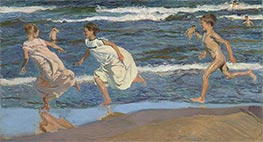
Giclée Canvas Print
$63.24
$63.24
SKU: 18694-JSB
Joaquin Sorolla y Bastida
Original Size:90 x 166.5 cm
Public Collection
Joaquin Sorolla y Bastida
Original Size:90 x 166.5 cm
Public Collection
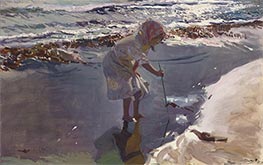
Giclée Canvas Print
$63.24
$63.24
SKU: 18699-JSB
Joaquin Sorolla y Bastida
Original Size:60.3 x 95 cm
Private Collection
Joaquin Sorolla y Bastida
Original Size:60.3 x 95 cm
Private Collection
Giclée Canvas Print
$63.24
$63.24
SKU: 18690-JSB
Joaquin Sorolla y Bastida
Original Size:265 x 403.5 cm
Musee d'Orsay, Paris, France
Joaquin Sorolla y Bastida
Original Size:265 x 403.5 cm
Musee d'Orsay, Paris, France
Giclée Canvas Print
$63.24
$63.24
SKU: 5371-JSB
Joaquin Sorolla y Bastida
Original Size:208 x 126.5 cm
Museo Sorolla, Madrid, Spain
Joaquin Sorolla y Bastida
Original Size:208 x 126.5 cm
Museo Sorolla, Madrid, Spain
Giclée Canvas Print
$95.67
$95.67
SKU: 5375-JSB
Joaquin Sorolla y Bastida
Original Size:150 x 150 cm
Museo Sorolla, Madrid, Spain
Joaquin Sorolla y Bastida
Original Size:150 x 150 cm
Museo Sorolla, Madrid, Spain
Giclée Canvas Print
$63.24
$63.24
SKU: 5382-JSB
Joaquin Sorolla y Bastida
Original Size:100 x 110 cm
Museo Sorolla, Madrid, Spain
Joaquin Sorolla y Bastida
Original Size:100 x 110 cm
Museo Sorolla, Madrid, Spain
Giclée Canvas Print
$68.66
$68.66
SKU: 5370-JSB
Joaquin Sorolla y Bastida
Original Size:77 x 105 cm
Real Academia de Bellas Artes de San Fernando, Madrid, Spain
Joaquin Sorolla y Bastida
Original Size:77 x 105 cm
Real Academia de Bellas Artes de San Fernando, Madrid, Spain
Giclée Canvas Print
$63.24
$63.24
SKU: 5374-JSB
Joaquin Sorolla y Bastida
Original Size:118 x 185 cm
Prado Museum, Madrid, Spain
Joaquin Sorolla y Bastida
Original Size:118 x 185 cm
Prado Museum, Madrid, Spain
Giclée Canvas Print
$67.27
$67.27
SKU: 5395-JSB
Joaquin Sorolla y Bastida
Original Size:222 x 300 cm
Galleria d'Arte Moderne, Venice, Italy
Joaquin Sorolla y Bastida
Original Size:222 x 300 cm
Galleria d'Arte Moderne, Venice, Italy
Giclée Canvas Print
$63.24
$63.24
SKU: 5373-JSB
Joaquin Sorolla y Bastida
Original Size:351 x 302.5 cm
Private Collection
Joaquin Sorolla y Bastida
Original Size:351 x 302.5 cm
Private Collection
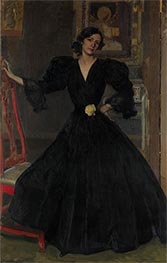
Giclée Canvas Print
$63.24
$63.24
SKU: 18688-JSB
Joaquin Sorolla y Bastida
Original Size:186.7 x 118.7 cm
Metropolitan Museum of Art, New York, USA
Joaquin Sorolla y Bastida
Original Size:186.7 x 118.7 cm
Metropolitan Museum of Art, New York, USA
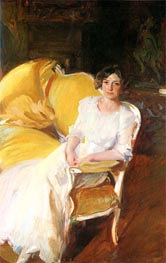
Giclée Canvas Print
$63.24
$63.24
SKU: 5392-JSB
Joaquin Sorolla y Bastida
Original Size:180 x 108 cm
Museo Sorolla, Madrid, Spain
Joaquin Sorolla y Bastida
Original Size:180 x 108 cm
Museo Sorolla, Madrid, Spain
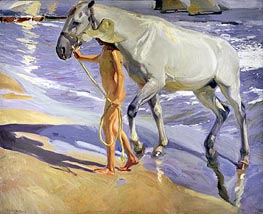
Giclée Canvas Print
$78.94
$78.94
SKU: 5385-JSB
Joaquin Sorolla y Bastida
Original Size:205 x 250 cm
Museo Sorolla, Madrid, Spain
Joaquin Sorolla y Bastida
Original Size:205 x 250 cm
Museo Sorolla, Madrid, Spain
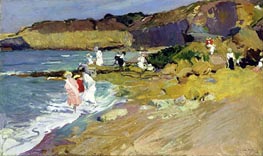
Giclée Canvas Print
$63.24
$63.24
SKU: 5365-JSB
Joaquin Sorolla y Bastida
Original Size:61.5 x 103.2 cm
Art Institute of Chicago, Illinois, USA
Joaquin Sorolla y Bastida
Original Size:61.5 x 103.2 cm
Art Institute of Chicago, Illinois, USA
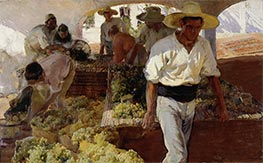
Giclée Canvas Print
$63.24
$63.24
SKU: 18695-JSB
Joaquin Sorolla y Bastida
Original Size:125 x 200 cm
Public Collection
Joaquin Sorolla y Bastida
Original Size:125 x 200 cm
Public Collection
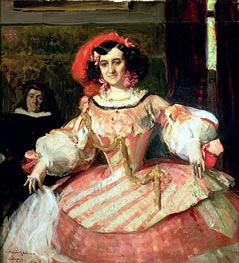
Giclée Canvas Print
$88.35
$88.35
SKU: 5380-JSB
Joaquin Sorolla y Bastida
Original Size:131 x 120.5 cm
Prado Museum, Madrid, Spain
Joaquin Sorolla y Bastida
Original Size:131 x 120.5 cm
Prado Museum, Madrid, Spain
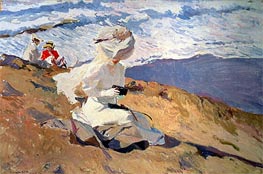
Giclée Canvas Print
$63.25
$63.25
SKU: 5369-JSB
Joaquin Sorolla y Bastida
Original Size:62 x 93.5 cm
Museo Sorolla, Madrid, Spain
Joaquin Sorolla y Bastida
Original Size:62 x 93.5 cm
Museo Sorolla, Madrid, Spain
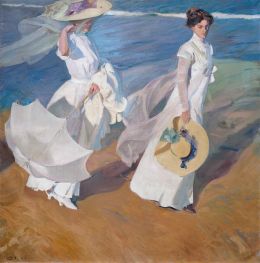
Giclée Canvas Print
$94.63
$94.63
SKU: 5379-JSB
Joaquin Sorolla y Bastida
Original Size:205 x 200 cm
Museo Sorolla, Madrid, Spain
Joaquin Sorolla y Bastida
Original Size:205 x 200 cm
Museo Sorolla, Madrid, Spain
Giclée Canvas Print
$63.44
$63.44
SKU: 18686-JSB
Joaquin Sorolla y Bastida
Original Size:95.3 x 63.5 cm
J. Paul Getty Museum, Los Angeles, USA
Joaquin Sorolla y Bastida
Original Size:95.3 x 63.5 cm
J. Paul Getty Museum, Los Angeles, USA
Giclée Canvas Print
$76.16
$76.16
SKU: 18693-JSB
Joaquin Sorolla y Bastida
Original Size:88 x 104 cm
Public Collection
Joaquin Sorolla y Bastida
Original Size:88 x 104 cm
Public Collection
Giclée Canvas Print
$68.13
$68.13
SKU: 5376-JSB
Joaquin Sorolla y Bastida
Original Size:91 x 127 cm
Private Collection
Joaquin Sorolla y Bastida
Original Size:91 x 127 cm
Private Collection
Giclée Canvas Print
$63.61
$63.61
SKU: 18687-JSB
Joaquin Sorolla y Bastida
Original Size:95.3 x 63.5 cm
J. Paul Getty Museum, Los Angeles, USA
Joaquin Sorolla y Bastida
Original Size:95.3 x 63.5 cm
J. Paul Getty Museum, Los Angeles, USA
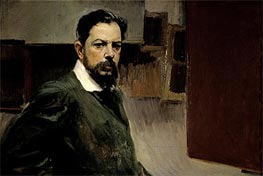
Giclée Canvas Print
$63.24
$63.24
SKU: 5368-JSB
Joaquin Sorolla y Bastida
Original Size:66 x 100.6 cm
Museo Sorolla, Madrid, Spain
Joaquin Sorolla y Bastida
Original Size:66 x 100.6 cm
Museo Sorolla, Madrid, Spain