
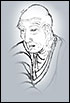
Katsushika Hokusai Giclée Fine Art Prints 1 of 14
1760-1849
Japanese Ukiyo-e Printmaker
At the age of seventy-three, the Japanese artist Katsushika Hokusai declared that he had only begun to understand the structure of animals, birds, insects, and fishes. By ninety, he hoped to penetrate their secret meaning. By one hundred and ten, he believed each dot and line would possess a life of its own. Such ambition was not idle boasting from a man who had already produced tens of thousands of works. Born around 31 October 1760 in the Katsushika district of Edo - the bustling capital of the Tokugawa shogunate, now modern Tokyo - Hokusai would spend nearly nine decades refining his art, dying on 10 May 1849 with a final lament that heaven had not granted him just five more years to become a real painter.
Few artists have reinvented themselves as relentlessly as Hokusai. Over the course of his career, he adopted at least thirty different names - more than any other major Japanese artist of his era. These were not mere aliases but markers of artistic transformation, each signaling a shift in style, subject matter, or philosophical outlook. His childhood name was Tokitarō, and he was likely the son of Nakajima Ise, a mirror-maker who crafted designs for the shōgun. The elder craftsman never made the boy his heir, suggesting perhaps that his mother was a concubine. Regardless of lineage, Hokusai began painting around the age of six, possibly learning from his father's decorative work on mirrors.
His formal training followed a circuitous path through Edo's creative industries. At twelve, he worked in a bookshop and lending library, where woodblock-printed books entertained the literate middle and upper classes. Two years later, he apprenticed to a woodcarver. At eighteen, he entered the studio of Katsukawa Shunshō, a prominent master of ukiyo-e - the woodblock print tradition that depicted the floating world of courtesans, kabuki actors, and urban pleasures. Within a year, Shunshō bestowed upon him the name Shunrō, under which he published his first prints: a series depicting kabuki performers that appeared in 1779.
During this decade in Shunshō's studio, Hokusai married twice. His first wife died in the early 1790s; his second, whom he wed in 1797, also died after a brief marriage. Together they had five children, and his youngest daughter Ei - later known as Ōi - would become an artist and his assistant. Works from this period, such as Fireworks in the Cool of Evening at Ryogoku Bridge in Edo from around 1788 to 1789, demonstrate his growing command of the ukiyo-e format while still operating within conventional subject matter.
Everything changed after Shunshō's death in 1793. Hokusai began investigating other artistic traditions, including European techniques he encountered through French and Dutch copper engravings circulating in Japan's restricted foreign trade channels. His curiosity proved costly. Shunkō, the chief disciple who now led the Katsukawa school, expelled him - possibly for studying at the rival Kanō school. Rather than crushing him, this humiliation became a catalyst. In his own words, the embarrassment he suffered at Shunkō's hands motivated the development of his artistic style.
Liberated from institutional constraints, Hokusai turned away from the portraits of courtesans and actors that defined traditional ukiyo-e. Landscapes and scenes of daily life among ordinary Japanese people became his focus - a decisive break that expanded the genre's possibilities. After a period associated with the Tawaraya School under the name Tawaraya Sōri, he emerged around 1800 as an independent artist with the name by which history remembers him: Katsushika Hokusai. The surname honored his birthplace; Hokusai means north studio, a reference to the North Star and a deity central to his Nichiren Buddhist faith.
That same year, he published two landscape collections - Famous Sights of the Eastern Capital and Eight Views of Edo - signaling his new direction. Students began seeking him out, and over his lifetime he would teach some fifty pupils. His genius for self-promotion matched his artistic ambition. During an Edo festival in 1804, he painted an enormous portrait of the Buddhist prelate Daruma measuring approximately two hundred square meters, wielding a broom dipped in buckets of ink before astonished crowds. Another story places him at the court of shōgun Tokugawa Ienari, where he won a competition against a traditional painter by chasing a chicken with red-painted feet across a sheet bearing a blue curve, then declaring the result a landscape of the Tatsuta River with autumn maple leaves floating downstream.
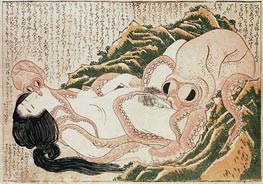
Between 1804 and 1815, Hokusai collaborated with the novelist Takizawa Bakin on illustrated books, including the fantasy novel Chinsetsu Yumiharizuki. The partnership produced thirteen works before ending - perhaps due to clashing temperaments or disagreements over illustration style. He also created albums of erotic art, most notoriously The Dream of the Fisherman's Wife from 1814, depicting a woman entwined with octopuses. Such range - from Buddhist iconography to explicit shunga - reveals an artist unwilling to be confined by propriety or expectation.
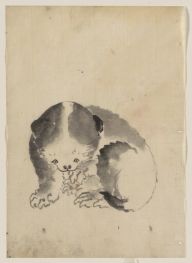
Adopting the name Taito in 1811, he embarked on the Hokusai Manga, art manuals that began appearing in 1814 and eventually comprised fifteen volumes containing thousands of drawings: animals, plants, religious figures, landscapes, and everyday people rendered with wit and precision. These served both as teaching tools and income sources. In 1817, he repeated his Daruma spectacle in Nagoya, painting an even larger portrait outside the Hongan-ji Nagoya Betsuin that earned him the nickname Darusen - Daruma Master.
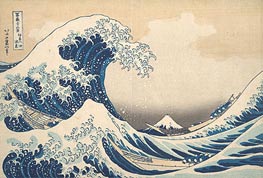
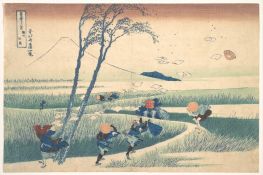
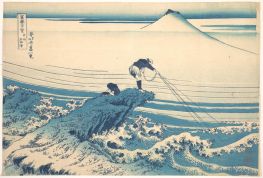
Yet his greatest achievement came in the early 1830s under the name Iitsu. The Thirty-Six Views of Mount Fuji - eventually expanded to forty-six prints - responded to a domestic travel boom and Hokusai's personal fascination with the sacred mountain. Two images from this series achieved unprecedented fame: The Great Wave off Kanagawa, with its towering curl of water threatening small boats beneath a distant Fuji, and Fine Wind, Clear Morning, known as Red Fuji for its warm-toned depiction of the peak at dawn. In The Great Wave, Hokusai deployed Western-influenced perspective to create spatial depth - a technique he had studied in his Manga. The series cemented his reputation across Japan and would later captivate European audiences.
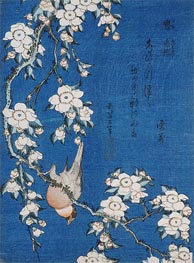
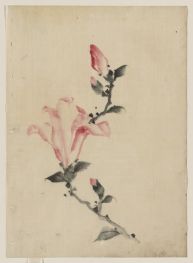
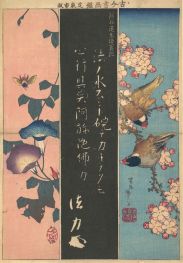
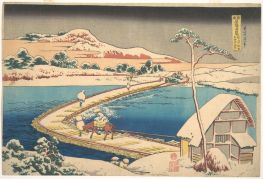
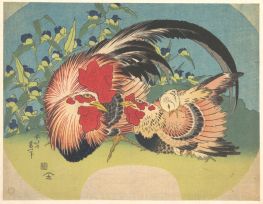
Beginning in 1834, working under the name Gakyō Rōjin Manji - The Old Man Mad About Art - he produced One Hundred Views of Mount Fuji, considered the masterpiece among his landscape picture books. Other series followed: A Tour of the Waterfalls of the Provinces, Unusual Views of Celebrated Bridges, and detailed flower-and-bird compositions such as Poppies and Flock of Chickens. A fire destroyed his studio and much of his work in 1839. Younger artists like Andō Hiroshige were rising to prominence. Yet Hokusai continued.
At eighty-three, he traveled to Obuse in Shinano Province at the invitation of the wealthy farmer Takai Kozan, where he created masterpieces including the Masculine Wave and Feminine Wave. Between 1842 and 1843, he painted Chinese lions every morning as talismans against misfortune - what he called daily exorcisms. His final works, completed shortly before his death, included The Dragon of Smoke Escaping from Mt Fuji and Tiger in the Snow.
Perhaps the relentless name changes reveal something essential about this artist: a refusal to settle, to declare any style complete. His woodblock prints helped spark the wave of Japonisme that swept Europe in the late nineteenth century, shaping the vision of Vincent van Gogh and Claude Monet. Today, The Great Wave remains one of the most reproduced images in art history - a testament to an artist who, even at death's door, believed his real work still lay ahead.
Few artists have reinvented themselves as relentlessly as Hokusai. Over the course of his career, he adopted at least thirty different names - more than any other major Japanese artist of his era. These were not mere aliases but markers of artistic transformation, each signaling a shift in style, subject matter, or philosophical outlook. His childhood name was Tokitarō, and he was likely the son of Nakajima Ise, a mirror-maker who crafted designs for the shōgun. The elder craftsman never made the boy his heir, suggesting perhaps that his mother was a concubine. Regardless of lineage, Hokusai began painting around the age of six, possibly learning from his father's decorative work on mirrors.
His formal training followed a circuitous path through Edo's creative industries. At twelve, he worked in a bookshop and lending library, where woodblock-printed books entertained the literate middle and upper classes. Two years later, he apprenticed to a woodcarver. At eighteen, he entered the studio of Katsukawa Shunshō, a prominent master of ukiyo-e - the woodblock print tradition that depicted the floating world of courtesans, kabuki actors, and urban pleasures. Within a year, Shunshō bestowed upon him the name Shunrō, under which he published his first prints: a series depicting kabuki performers that appeared in 1779.
During this decade in Shunshō's studio, Hokusai married twice. His first wife died in the early 1790s; his second, whom he wed in 1797, also died after a brief marriage. Together they had five children, and his youngest daughter Ei - later known as Ōi - would become an artist and his assistant. Works from this period, such as Fireworks in the Cool of Evening at Ryogoku Bridge in Edo from around 1788 to 1789, demonstrate his growing command of the ukiyo-e format while still operating within conventional subject matter.
Everything changed after Shunshō's death in 1793. Hokusai began investigating other artistic traditions, including European techniques he encountered through French and Dutch copper engravings circulating in Japan's restricted foreign trade channels. His curiosity proved costly. Shunkō, the chief disciple who now led the Katsukawa school, expelled him - possibly for studying at the rival Kanō school. Rather than crushing him, this humiliation became a catalyst. In his own words, the embarrassment he suffered at Shunkō's hands motivated the development of his artistic style.
Liberated from institutional constraints, Hokusai turned away from the portraits of courtesans and actors that defined traditional ukiyo-e. Landscapes and scenes of daily life among ordinary Japanese people became his focus - a decisive break that expanded the genre's possibilities. After a period associated with the Tawaraya School under the name Tawaraya Sōri, he emerged around 1800 as an independent artist with the name by which history remembers him: Katsushika Hokusai. The surname honored his birthplace; Hokusai means north studio, a reference to the North Star and a deity central to his Nichiren Buddhist faith.
That same year, he published two landscape collections - Famous Sights of the Eastern Capital and Eight Views of Edo - signaling his new direction. Students began seeking him out, and over his lifetime he would teach some fifty pupils. His genius for self-promotion matched his artistic ambition. During an Edo festival in 1804, he painted an enormous portrait of the Buddhist prelate Daruma measuring approximately two hundred square meters, wielding a broom dipped in buckets of ink before astonished crowds. Another story places him at the court of shōgun Tokugawa Ienari, where he won a competition against a traditional painter by chasing a chicken with red-painted feet across a sheet bearing a blue curve, then declaring the result a landscape of the Tatsuta River with autumn maple leaves floating downstream.
Between 1804 and 1815, Hokusai collaborated with the novelist Takizawa Bakin on illustrated books, including the fantasy novel Chinsetsu Yumiharizuki. The partnership produced thirteen works before ending - perhaps due to clashing temperaments or disagreements over illustration style. He also created albums of erotic art, most notoriously The Dream of the Fisherman's Wife from 1814, depicting a woman entwined with octopuses. Such range - from Buddhist iconography to explicit shunga - reveals an artist unwilling to be confined by propriety or expectation.
Adopting the name Taito in 1811, he embarked on the Hokusai Manga, art manuals that began appearing in 1814 and eventually comprised fifteen volumes containing thousands of drawings: animals, plants, religious figures, landscapes, and everyday people rendered with wit and precision. These served both as teaching tools and income sources. In 1817, he repeated his Daruma spectacle in Nagoya, painting an even larger portrait outside the Hongan-ji Nagoya Betsuin that earned him the nickname Darusen - Daruma Master.
Yet his greatest achievement came in the early 1830s under the name Iitsu. The Thirty-Six Views of Mount Fuji - eventually expanded to forty-six prints - responded to a domestic travel boom and Hokusai's personal fascination with the sacred mountain. Two images from this series achieved unprecedented fame: The Great Wave off Kanagawa, with its towering curl of water threatening small boats beneath a distant Fuji, and Fine Wind, Clear Morning, known as Red Fuji for its warm-toned depiction of the peak at dawn. In The Great Wave, Hokusai deployed Western-influenced perspective to create spatial depth - a technique he had studied in his Manga. The series cemented his reputation across Japan and would later captivate European audiences.
Beginning in 1834, working under the name Gakyō Rōjin Manji - The Old Man Mad About Art - he produced One Hundred Views of Mount Fuji, considered the masterpiece among his landscape picture books. Other series followed: A Tour of the Waterfalls of the Provinces, Unusual Views of Celebrated Bridges, and detailed flower-and-bird compositions such as Poppies and Flock of Chickens. A fire destroyed his studio and much of his work in 1839. Younger artists like Andō Hiroshige were rising to prominence. Yet Hokusai continued.
At eighty-three, he traveled to Obuse in Shinano Province at the invitation of the wealthy farmer Takai Kozan, where he created masterpieces including the Masculine Wave and Feminine Wave. Between 1842 and 1843, he painted Chinese lions every morning as talismans against misfortune - what he called daily exorcisms. His final works, completed shortly before his death, included The Dragon of Smoke Escaping from Mt Fuji and Tiger in the Snow.
Perhaps the relentless name changes reveal something essential about this artist: a refusal to settle, to declare any style complete. His woodblock prints helped spark the wave of Japonisme that swept Europe in the late nineteenth century, shaping the vision of Vincent van Gogh and Claude Monet. Today, The Great Wave remains one of the most reproduced images in art history - a testament to an artist who, even at death's door, believed his real work still lay ahead.
319 Hokusai Artworks
Page 1 of 14
Giclée Paper Art Print
$60.04
$60.04
SKU: 16582-HOK
Katsushika Hokusai
Original Size:18.9 x 26.6 cm
Public Collection
Katsushika Hokusai
Original Size:18.9 x 26.6 cm
Public Collection
Giclée Paper Art Print
$60.04
$60.04
SKU: 16685-HOK
Katsushika Hokusai
Original Size:25.3 x 18.8 cm
Old Masters Gallery, Berlin, Germany
Katsushika Hokusai
Original Size:25.3 x 18.8 cm
Old Masters Gallery, Berlin, Germany
Giclée Paper Art Print
$60.04
$60.04
SKU: 16581-HOK
Katsushika Hokusai
Original Size:25.4 x 38 cm
Metropolitan Museum of Art, New York, USA
Katsushika Hokusai
Original Size:25.4 x 38 cm
Metropolitan Museum of Art, New York, USA
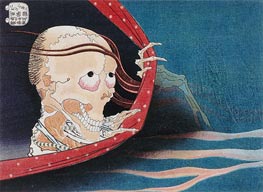
Giclée Paper Art Print
$60.04
$60.04
SKU: 16687-HOK
Katsushika Hokusai
Original Size:18.5 x 25.8 cm
Public Collection
Katsushika Hokusai
Original Size:18.5 x 25.8 cm
Public Collection
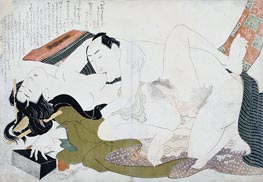
Giclée Paper Art Print
$60.04
$60.04
SKU: 16686-HOK
Katsushika Hokusai
Original Size:25 x 36.6 cm
Public Collection
Katsushika Hokusai
Original Size:25 x 36.6 cm
Public Collection
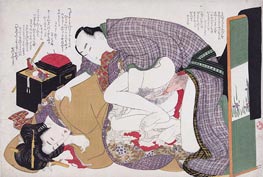
Giclée Paper Art Print
$60.04
$60.04
SKU: 16688-HOK
Katsushika Hokusai
Original Size:26.5 x 39.4 cm
Rijksmuseum, Amsterdam, Netherlands
Katsushika Hokusai
Original Size:26.5 x 39.4 cm
Rijksmuseum, Amsterdam, Netherlands
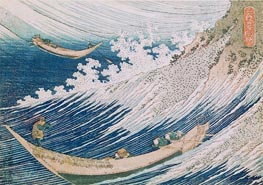
Giclée Paper Art Print
$60.04
$60.04
SKU: 16684-HOK
Katsushika Hokusai
Original Size:unknown
Public Collection
Katsushika Hokusai
Original Size:unknown
Public Collection
Giclée Paper Art Print
$60.04
$60.04
SKU: 20416-HOK
Katsushika Hokusai
Original Size:26.7 x 19.4 cm
Public Collection
Katsushika Hokusai
Original Size:26.7 x 19.4 cm
Public Collection
Giclée Paper Art Print
$60.04
$60.04
SKU: 20328-HOK
Katsushika Hokusai
Original Size:38 x 30.4 cm
Metropolitan Museum of Art, New York, USA
Katsushika Hokusai
Original Size:38 x 30.4 cm
Metropolitan Museum of Art, New York, USA
Giclée Paper Art Print
$60.04
$60.04
SKU: 20280-HOK
Katsushika Hokusai
Original Size:25.1 x 37.5 cm
Metropolitan Museum of Art, New York, USA
Katsushika Hokusai
Original Size:25.1 x 37.5 cm
Metropolitan Museum of Art, New York, USA
Giclée Paper Art Print
$60.04
$60.04
SKU: 20338-HOK
Katsushika Hokusai
Original Size:25.7 x 39.4 cm
Metropolitan Museum of Art, New York, USA
Katsushika Hokusai
Original Size:25.7 x 39.4 cm
Metropolitan Museum of Art, New York, USA
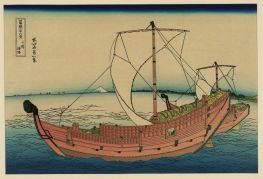
Giclée Paper Art Print
$60.04
$60.04
SKU: 20396-HOK
Katsushika Hokusai
Original Size:25.9 x 38 cm
Public Collection
Katsushika Hokusai
Original Size:25.9 x 38 cm
Public Collection
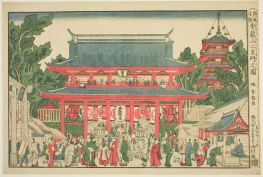
Giclée Paper Art Print
$60.04
$60.04
SKU: 20496-HOK
Katsushika Hokusai
Original Size:25.6 x 37.8 cm
Art Institute of Chicago, Illinois, USA
Katsushika Hokusai
Original Size:25.6 x 37.8 cm
Art Institute of Chicago, Illinois, USA
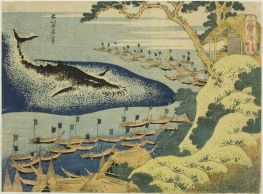
Giclée Paper Art Print
$60.04
$60.04
SKU: 20472-HOK
Katsushika Hokusai
Original Size:19 x 25.7 cm
Art Institute of Chicago, Illinois, USA
Katsushika Hokusai
Original Size:19 x 25.7 cm
Art Institute of Chicago, Illinois, USA
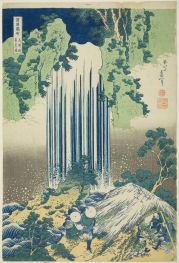
Giclée Paper Art Print
$60.04
$60.04
SKU: 20493-HOK
Katsushika Hokusai
Original Size:38.2 x 25.4 cm
Art Institute of Chicago, Illinois, USA
Katsushika Hokusai
Original Size:38.2 x 25.4 cm
Art Institute of Chicago, Illinois, USA
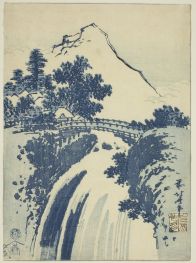
Giclée Paper Art Print
$60.04
$60.04
SKU: 20586-HOK
Katsushika Hokusai
Original Size:38 x 28.5 cm
Art Institute of Chicago, Illinois, USA
Katsushika Hokusai
Original Size:38 x 28.5 cm
Art Institute of Chicago, Illinois, USA
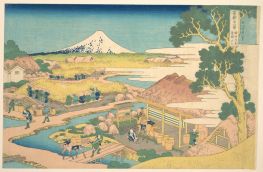
Giclée Paper Art Print
$60.04
$60.04
SKU: 20281-HOK
Katsushika Hokusai
Original Size:24.4 x 37.5 cm
Metropolitan Museum of Art, New York, USA
Katsushika Hokusai
Original Size:24.4 x 37.5 cm
Metropolitan Museum of Art, New York, USA
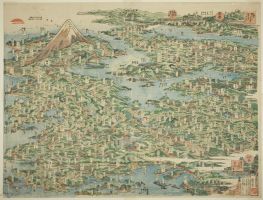
Giclée Paper Art Print
$67.51
$67.51
SKU: 20495-HOK
Katsushika Hokusai
Original Size:43 x 58 cm
Art Institute of Chicago, Illinois, USA
Katsushika Hokusai
Original Size:43 x 58 cm
Art Institute of Chicago, Illinois, USA
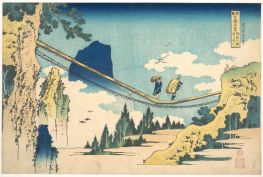
Giclée Paper Art Print
$60.04
$60.04
SKU: 20339-HOK
Katsushika Hokusai
Original Size:25.7 x 38 cm
Metropolitan Museum of Art, New York, USA
Katsushika Hokusai
Original Size:25.7 x 38 cm
Metropolitan Museum of Art, New York, USA
Giclée Paper Art Print
$60.04
$60.04
SKU: 20415-HOK
Katsushika Hokusai
Original Size:26.8 x 19.1 cm
Public Collection
Katsushika Hokusai
Original Size:26.8 x 19.1 cm
Public Collection
Giclée Paper Art Print
$60.04
$60.04
SKU: 20349-HOK
Katsushika Hokusai
Original Size:22.9 x 29.2 cm
Metropolitan Museum of Art, New York, USA
Katsushika Hokusai
Original Size:22.9 x 29.2 cm
Metropolitan Museum of Art, New York, USA
Giclée Paper Art Print
$60.04
$60.04
SKU: 20309-HOK
Katsushika Hokusai
Original Size:26 x 38.4 cm
Metropolitan Museum of Art, New York, USA
Katsushika Hokusai
Original Size:26 x 38.4 cm
Metropolitan Museum of Art, New York, USA
Giclée Paper Art Print
$60.04
$60.04
SKU: 20561-HOK
Katsushika Hokusai
Original Size:20.4 x 27.2 cm
Art Institute of Chicago, Illinois, USA
Katsushika Hokusai
Original Size:20.4 x 27.2 cm
Art Institute of Chicago, Illinois, USA
Giclée Paper Art Print
$60.04
$60.04
SKU: 20335-HOK
Katsushika Hokusai
Original Size:26.9 x 38 cm
Metropolitan Museum of Art, New York, USA
Katsushika Hokusai
Original Size:26.9 x 38 cm
Metropolitan Museum of Art, New York, USA