
John Constable Giclée Fine Art Prints 1 of 3
1776-1837
English Romanticism Painter
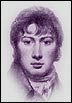
John Constable (11 June 1776 - 31 March 1837) stands among the most significant English landscape painters of the Romantic era. A native of Suffolk, he devoted his artistic life to capturing the rural scenery of his childhood - the meadows, mills, and waterways of the Stour Valley that would later become known as "Constable Country." His vision of the English countryside, rendered with unprecedented naturalism and emotional depth, transformed landscape painting in Britain and profoundly shaped artistic movements across Europe.
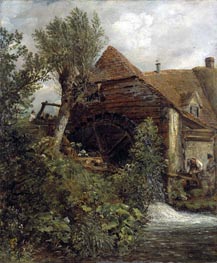
East Bergholt, a village along the River Stour, was where Constable entered the world as the second son of Golding Constable, a prosperous corn merchant who owned Flatford Mill and later Dedham Mill in Essex. Expected to inherit the family business, the young Constable attended schools in Lavenham and Dedham before working alongside his father in the grain trade. Yet the Suffolk landscape exerted a stronger pull than commerce ever could. Rambling through the countryside as an amateur sketcher, he absorbed every detail of the region - the willows bending over mill dams, the weathered planks and mossy brickwork, the play of light on water. These scenes, he would later declare, made him a painter.
A pivotal encounter with the collector George Beaumont introduced Constable to Claude Lorrain's luminous Hagar and the Angel, a work that stirred his ambitions. In 1799, having persuaded his father to grant him a small allowance, he entered the Royal Academy Schools in London. There he studied anatomy, attended life classes, and immersed himself in the old masters - Gainsborough, Rubens, Carracci, and the Dutch landscapist Jacob van Ruisdael. Reading widely in poetry and sermons, he developed the articulate sensibility that would distinguish his later writings on art.
Rejecting a secure position as drawing master at Great Marlow Military College in 1802, Constable committed himself fully to landscape painting despite Benjamin West's warning that such a decision would end his career. That same year, he articulated his artistic credo in a letter to his friend John Dunthorne: he would cease imitating other painters and instead pursue nature directly. "There is room enough for a natural painter," he wrote, dismissing the fashionable "bravura" of his contemporaries as an attempt to go beyond truth.
Progress came slowly. Constable exhibited at the Royal Academy from 1803, but his subjects - ordinary rural scenes rather than sublime wildernesses or picturesque ruins - found few buyers. A two-month tour of the Lake District in 1806 left him oppressed rather than inspired; the mountains' solitude troubled his sociable nature, which craved villages, churches, and farmhouses. Returning to Suffolk, he established a pattern of wintering in London while painting at East Bergholt during summer months. Portrait commissions and occasional religious works provided income, though neither suited his temperament. His 1811 visit to Salisbury, where he befriended the clergyman John Fisher, proved more consequential - the cathedral and its surrounding meadows would inspire some of his finest canvases.
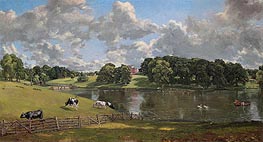
Country house commissions offered another lifeline. In 1816, Major-General Francis Slater Rebow engaged Constable to paint Wivenhoe Park, his Essex estate. The resulting picture, now in the National Gallery of Art in Washington, captures the undulating parkland with remarkable freshness - cattle grazing near a lake, swans gliding across the water, clouds massing overhead. The fee helped finance Constable's long-delayed marriage to Maria Bicknell that October. Their union had faced years of opposition from Maria's grandfather, who considered the Constables socially inferior and threatened disinheritance. Only after both of Constable's parents died, leaving him a share of the family business, could the wedding proceed.
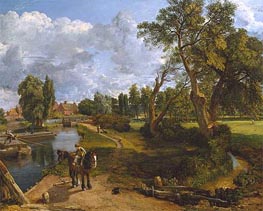
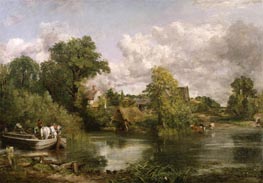
Married life and artistic ambition advanced together. In 1817, Constable exhibited Flatford Mill (Scene on a Navigable River), the largest working scene of the Stour he had yet attempted. Although it failed to sell, critical praise encouraged him toward even larger canvases. The breakthrough arrived in 1819 with The White Horse, purchased by John Fisher for one hundred guineas. This sale - his first important one - brought election as an associate of the Royal Academy and launched the series of monumental "six-footers" depicting narratives along the Stour. Stratford Mill followed in 1820, drawing acclaim for its exact rendering of nature. Then came The Hay Wain in 1821, the canvas that would ultimately secure Constable's reputation.
At the Royal Academy exhibition, The Hay Wain attracted no English buyer but captured the attention of the French painter Théodore Géricault and the writer Charles Nodier. Three years later, the Anglo-French dealer John Arrowsmith purchased it along with View on the Stour near Dedham. Exhibited at the Paris Salon, both works caused a sensation. Charles X awarded The Hay Wain a gold medal, and Eugène Delacroix, profoundly impressed by Constable's handling of green tones, repainted the background of his own Massacre at Chios after viewing the English pictures. In France, Constable sold more than twenty paintings in a few years - far exceeding his English sales of just twenty works across his entire lifetime. Yet he refused all invitations to travel abroad, preferring, as he told Francis Darby, to remain "a poor man in England" rather than "a rich man abroad."
Personal tragedy shadowed professional success. Maria developed tuberculosis, and from 1824 the family took lodgings in Brighton, hoping sea air might restore her health. Constable found the resort uncongenial - "Piccadilly by the seaside," he called it - but produced remarkable coastal studies with vivid brushwork and brilliant colour. His only ambitious Brighton canvas, Chain Pier, appeared in 1827. The following January, Maria gave birth to their seventh child. By November, she was dead at forty-one. Constable, devastated, wrote to his brother that "the face of the World is totally changed to me." He dressed in black thereafter and raised his seven children alone.
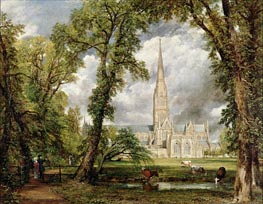
Grief intensified his art. The serene compositions of earlier years gave way to more turbulent visions - Hadleigh Castle (1829), with its ruined tower against stormy skies, and Salisbury Cathedral from the Meadows (1831), where a rainbow arcs over the spire amid gathering clouds. These late masterpieces possess an emotional power absent from his younger work, their broken brushstrokes and dramatic lighting reflecting inner turmoil.
Election to full membership of the Royal Academy came in February 1829, when Constable was fifty-two. He served as Visitor, proving popular with students, and delivered public lectures on landscape painting's history to distinguished audiences. At the Royal Institution in 1836, he argued that painting was "scientific as well as poetic" and that no great painter was ever self-taught. His watercolour Stonehenge (1835), with its double rainbow over the ancient monument, ranks among the medium's supreme achievements.
On the night of 31 March 1837, John Constable died of apparent heart failure. He was buried beside Maria at St John-at-Hampstead in London. His friend Charles Robert Leslie published an influential biography in 1843, ensuring that Constable's methods and philosophy would reach future generations. Today his pictures command immense prices and hang in major collections worldwide, from the National Gallery in London to the Frick Collection in New York. More significantly, his insistence on painting directly from nature - his cloud studies annotated with meteorological observations, his full-scale oil sketches capturing effects of light and atmosphere - anticipated developments that would culminate in Impressionism. The Barbizon painters acknowledged their debt; Monet and his circle extended Constable's innovations further still. What he dismissed as his "limited and abstracted art," found "under every hedge and in every lane," proved to be a revolution.
East Bergholt, a village along the River Stour, was where Constable entered the world as the second son of Golding Constable, a prosperous corn merchant who owned Flatford Mill and later Dedham Mill in Essex. Expected to inherit the family business, the young Constable attended schools in Lavenham and Dedham before working alongside his father in the grain trade. Yet the Suffolk landscape exerted a stronger pull than commerce ever could. Rambling through the countryside as an amateur sketcher, he absorbed every detail of the region - the willows bending over mill dams, the weathered planks and mossy brickwork, the play of light on water. These scenes, he would later declare, made him a painter.
A pivotal encounter with the collector George Beaumont introduced Constable to Claude Lorrain's luminous Hagar and the Angel, a work that stirred his ambitions. In 1799, having persuaded his father to grant him a small allowance, he entered the Royal Academy Schools in London. There he studied anatomy, attended life classes, and immersed himself in the old masters - Gainsborough, Rubens, Carracci, and the Dutch landscapist Jacob van Ruisdael. Reading widely in poetry and sermons, he developed the articulate sensibility that would distinguish his later writings on art.
Rejecting a secure position as drawing master at Great Marlow Military College in 1802, Constable committed himself fully to landscape painting despite Benjamin West's warning that such a decision would end his career. That same year, he articulated his artistic credo in a letter to his friend John Dunthorne: he would cease imitating other painters and instead pursue nature directly. "There is room enough for a natural painter," he wrote, dismissing the fashionable "bravura" of his contemporaries as an attempt to go beyond truth.
Progress came slowly. Constable exhibited at the Royal Academy from 1803, but his subjects - ordinary rural scenes rather than sublime wildernesses or picturesque ruins - found few buyers. A two-month tour of the Lake District in 1806 left him oppressed rather than inspired; the mountains' solitude troubled his sociable nature, which craved villages, churches, and farmhouses. Returning to Suffolk, he established a pattern of wintering in London while painting at East Bergholt during summer months. Portrait commissions and occasional religious works provided income, though neither suited his temperament. His 1811 visit to Salisbury, where he befriended the clergyman John Fisher, proved more consequential - the cathedral and its surrounding meadows would inspire some of his finest canvases.
Country house commissions offered another lifeline. In 1816, Major-General Francis Slater Rebow engaged Constable to paint Wivenhoe Park, his Essex estate. The resulting picture, now in the National Gallery of Art in Washington, captures the undulating parkland with remarkable freshness - cattle grazing near a lake, swans gliding across the water, clouds massing overhead. The fee helped finance Constable's long-delayed marriage to Maria Bicknell that October. Their union had faced years of opposition from Maria's grandfather, who considered the Constables socially inferior and threatened disinheritance. Only after both of Constable's parents died, leaving him a share of the family business, could the wedding proceed.
Married life and artistic ambition advanced together. In 1817, Constable exhibited Flatford Mill (Scene on a Navigable River), the largest working scene of the Stour he had yet attempted. Although it failed to sell, critical praise encouraged him toward even larger canvases. The breakthrough arrived in 1819 with The White Horse, purchased by John Fisher for one hundred guineas. This sale - his first important one - brought election as an associate of the Royal Academy and launched the series of monumental "six-footers" depicting narratives along the Stour. Stratford Mill followed in 1820, drawing acclaim for its exact rendering of nature. Then came The Hay Wain in 1821, the canvas that would ultimately secure Constable's reputation.
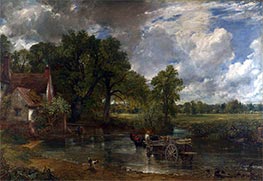
At the Royal Academy exhibition, The Hay Wain attracted no English buyer but captured the attention of the French painter Théodore Géricault and the writer Charles Nodier. Three years later, the Anglo-French dealer John Arrowsmith purchased it along with View on the Stour near Dedham. Exhibited at the Paris Salon, both works caused a sensation. Charles X awarded The Hay Wain a gold medal, and Eugène Delacroix, profoundly impressed by Constable's handling of green tones, repainted the background of his own Massacre at Chios after viewing the English pictures. In France, Constable sold more than twenty paintings in a few years - far exceeding his English sales of just twenty works across his entire lifetime. Yet he refused all invitations to travel abroad, preferring, as he told Francis Darby, to remain "a poor man in England" rather than "a rich man abroad."
Personal tragedy shadowed professional success. Maria developed tuberculosis, and from 1824 the family took lodgings in Brighton, hoping sea air might restore her health. Constable found the resort uncongenial - "Piccadilly by the seaside," he called it - but produced remarkable coastal studies with vivid brushwork and brilliant colour. His only ambitious Brighton canvas, Chain Pier, appeared in 1827. The following January, Maria gave birth to their seventh child. By November, she was dead at forty-one. Constable, devastated, wrote to his brother that "the face of the World is totally changed to me." He dressed in black thereafter and raised his seven children alone.
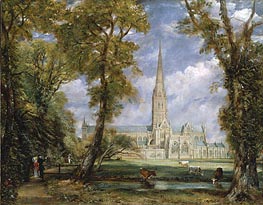
Grief intensified his art. The serene compositions of earlier years gave way to more turbulent visions - Hadleigh Castle (1829), with its ruined tower against stormy skies, and Salisbury Cathedral from the Meadows (1831), where a rainbow arcs over the spire amid gathering clouds. These late masterpieces possess an emotional power absent from his younger work, their broken brushstrokes and dramatic lighting reflecting inner turmoil.
Election to full membership of the Royal Academy came in February 1829, when Constable was fifty-two. He served as Visitor, proving popular with students, and delivered public lectures on landscape painting's history to distinguished audiences. At the Royal Institution in 1836, he argued that painting was "scientific as well as poetic" and that no great painter was ever self-taught. His watercolour Stonehenge (1835), with its double rainbow over the ancient monument, ranks among the medium's supreme achievements.
On the night of 31 March 1837, John Constable died of apparent heart failure. He was buried beside Maria at St John-at-Hampstead in London. His friend Charles Robert Leslie published an influential biography in 1843, ensuring that Constable's methods and philosophy would reach future generations. Today his pictures command immense prices and hang in major collections worldwide, from the National Gallery in London to the Frick Collection in New York. More significantly, his insistence on painting directly from nature - his cloud studies annotated with meteorological observations, his full-scale oil sketches capturing effects of light and atmosphere - anticipated developments that would culminate in Impressionism. The Barbizon painters acknowledged their debt; Monet and his circle extended Constable's innovations further still. What he dismissed as his "limited and abstracted art," found "under every hedge and in every lane," proved to be a revolution.
66 Constable Artworks
Page 1 of 3
Giclée Canvas Print
$75.24
$75.24
SKU: 5088-COJ
John Constable
Original Size:87.9 x 111.8 cm
Metropolitan Museum of Art, New York, USA
John Constable
Original Size:87.9 x 111.8 cm
Metropolitan Museum of Art, New York, USA
Giclée Canvas Print
$67.01
$67.01
SKU: 2900-COJ
John Constable
Original Size:130.2 x 185.4 cm
National Gallery, London, UK
John Constable
Original Size:130.2 x 185.4 cm
National Gallery, London, UK
Giclée Canvas Print
$65.61
$65.61
SKU: 19724-COJ
John Constable
Original Size:55 x 78 cm
Cincinnati Art Museum, Ohio, USA
John Constable
Original Size:55 x 78 cm
Cincinnati Art Museum, Ohio, USA
Giclée Canvas Print
$67.88
$67.88
SKU: 5076-COJ
John Constable
Original Size:53.7 x 76.2 cm
Victoria and Albert Museum, London, UK
John Constable
Original Size:53.7 x 76.2 cm
Victoria and Albert Museum, London, UK
Giclée Canvas Print
$74.01
$74.01
SKU: 2903-COJ
John Constable
Original Size:59.6 x 77.6 cm
Victoria and Albert Museum, London, UK
John Constable
Original Size:59.6 x 77.6 cm
Victoria and Albert Museum, London, UK
Giclée Canvas Print
$76.98
$76.98
SKU: 2898-COJ
John Constable
Original Size:101.6 x 127 cm
Tate Gallery, London, UK
John Constable
Original Size:101.6 x 127 cm
Tate Gallery, London, UK
Giclée Canvas Print
$78.38
$78.38
SKU: 5072-COJ
John Constable
Original Size:62 x 51.5 cm
Victoria and Albert Museum, London, UK
John Constable
Original Size:62 x 51.5 cm
Victoria and Albert Museum, London, UK
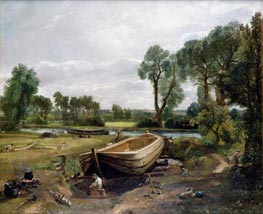
Giclée Canvas Print
$80.65
$80.65
SKU: 2895-COJ
John Constable
Original Size:50.8 x 61.6 cm
Victoria and Albert Museum, London, UK
John Constable
Original Size:50.8 x 61.6 cm
Victoria and Albert Museum, London, UK
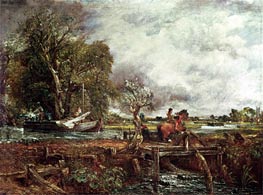
Giclée Canvas Print
$71.74
$71.74
SKU: 2901-COJ
John Constable
Original Size:142 x 187.3 cm
Royal Academy of Arts, London, UK
John Constable
Original Size:142 x 187.3 cm
Royal Academy of Arts, London, UK
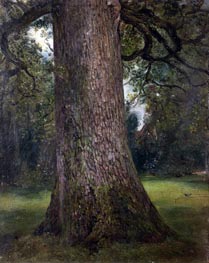
Giclée Canvas Print
$63.50
$63.50
SKU: 5073-COJ
John Constable
Original Size:30.6 x 24.8 cm
Victoria and Albert Museum, London, UK
John Constable
Original Size:30.6 x 24.8 cm
Victoria and Albert Museum, London, UK
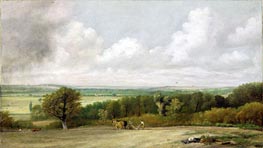
Giclée Canvas Print
$63.50
$63.50
SKU: 5080-COJ
John Constable
Original Size:42.5 x 76.2 cm
Yale Center for British Art, Connecticut, USA
John Constable
Original Size:42.5 x 76.2 cm
Yale Center for British Art, Connecticut, USA
Giclée Canvas Print
$66.48
$66.48
SKU: 2889-COJ
John Constable
Original Size:131.4 x 188.3 cm
Frick Collection, New York, USA
John Constable
Original Size:131.4 x 188.3 cm
Frick Collection, New York, USA
Giclée Canvas Print
$78.74
$78.74
SKU: 5066-COJ
John Constable
Original Size:63 x 52 cm
Victoria and Albert Museum, London, UK
John Constable
Original Size:63 x 52 cm
Victoria and Albert Museum, London, UK
Giclée Canvas Print
$74.88
$74.88
SKU: 5064-COJ
John Constable
Original Size:87.6 x 111.8 cm
Victoria and Albert Museum, London, UK
John Constable
Original Size:87.6 x 111.8 cm
Victoria and Albert Museum, London, UK
Giclée Canvas Print
$68.94
$68.94
SKU: 5104-COJ
John Constable
Original Size:72.4 x 100.3 cm
Toledo Museum of Art, Ohio, USA
John Constable
Original Size:72.4 x 100.3 cm
Toledo Museum of Art, Ohio, USA
Giclée Canvas Print
$63.50
$63.50
SKU: 15461-COJ
John Constable
Original Size:56 x 101.2 cm
National Gallery of Art, Washington, USA
John Constable
Original Size:56 x 101.2 cm
National Gallery of Art, Washington, USA
Giclée Canvas Print
$68.41
$68.41
SKU: 5103-COJ
John Constable
Original Size:54.6 x 77.4 cm
Currier Museum of Art, New Hampshire, USA
John Constable
Original Size:54.6 x 77.4 cm
Currier Museum of Art, New Hampshire, USA
Giclée Canvas Print
$63.50
$63.50
SKU: 12316-COJ
John Constable
Original Size:30.8 x 51.1 cm
Philadelphia Museum of Art, Pennsylvania, USA
John Constable
Original Size:30.8 x 51.1 cm
Philadelphia Museum of Art, Pennsylvania, USA
Giclée Canvas Print
$79.61
$79.61
SKU: 5079-COJ
John Constable
Original Size:50.2 x 60.3 cm
Yale Center for British Art, Connecticut, USA
John Constable
Original Size:50.2 x 60.3 cm
Yale Center for British Art, Connecticut, USA
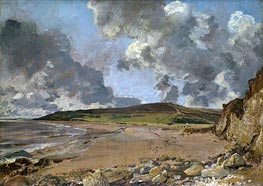
Giclée Canvas Print
$113.15
$113.15
SKU: 12306-COJ
John Constable
Original Size:53 x 75 cm
National Gallery, London, UK
John Constable
Original Size:53 x 75 cm
National Gallery, London, UK
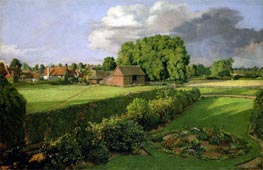
Giclée Canvas Print
$63.50
$63.50
SKU: 2897-COJ
John Constable
Original Size:33 x 50.8 cm
Borough Council Museums and Galleries, Ipswich, UK
John Constable
Original Size:33 x 50.8 cm
Borough Council Museums and Galleries, Ipswich, UK
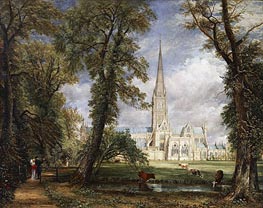
Giclée Canvas Print
$75.94
$75.94
SKU: 2888-COJ
John Constable
Original Size:88.9 x 112.4 cm
Frick Collection, New York, USA
John Constable
Original Size:88.9 x 112.4 cm
Frick Collection, New York, USA
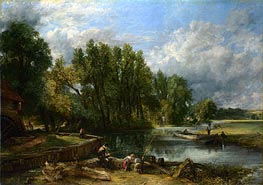
Giclée Canvas Print
$67.54
$67.54
SKU: 5092-COJ
John Constable
Original Size:127 x 182.9 cm
National Gallery, London, UK
John Constable
Original Size:127 x 182.9 cm
National Gallery, London, UK
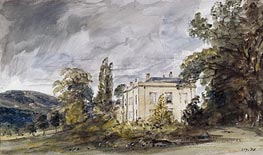
Giclée Paper Art Print
$60.12
$60.12
SKU: 12311-COJ
John Constable
Original Size:14 x 23.5 cm
Victoria and Albert Museum, London, UK
John Constable
Original Size:14 x 23.5 cm
Victoria and Albert Museum, London, UK